Dog Afraid of Thunderstorms? A Calm, Safe Plan
35% off on product page · save $9.69
Dog Afraid of Thunderstorms? A Calm, Safe Plan

Start with a safer, quieter place
Choose an interior room or a familiar resting spot where your dog can retreat voluntarily. Make it accessible before bad weather arrives, and let your dog decide whether to use it. If they prefer to hide elsewhere and that spot is safe, you do not need to move them. Never force a frightened dog into a crate or pull them out of a hiding place.
Close curtains to reduce lightning flashes where possible. A fan or other steady background sound may soften sudden noise, but keep it at a comfortable volume; louder is not necessarily better. Leave water available. Before the storm, secure doors and gates and make sure your dog’s identification is current. A scared dog may try to escape, even if they normally stay close to home.
Featured in this guide
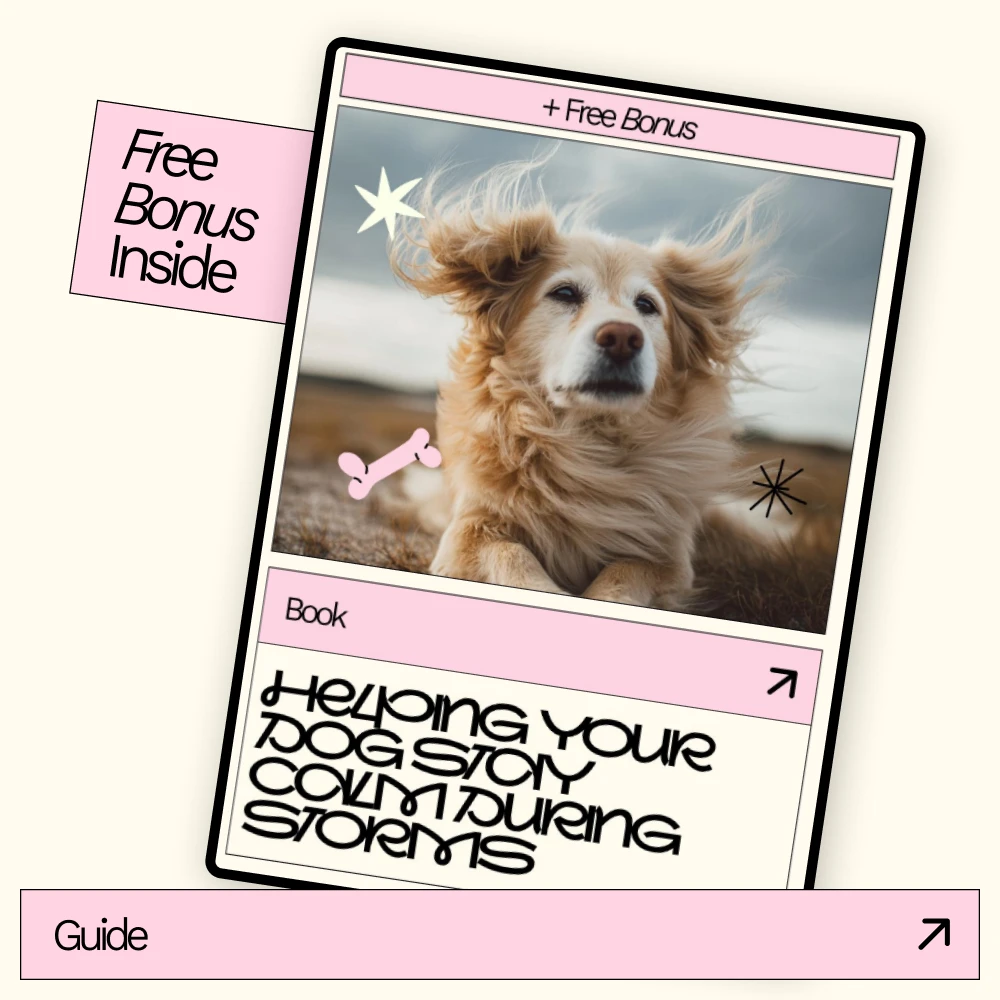
Helping Your Dog Stay Calm During Storms | Ebook for a Dog Afraid of Thunderstorms | Anxiety Relief Guide, Calming Training & Proven Techniques
When thunder begins
Offer quiet company if your dog approaches you, and give them space if they move away. If they still want to engage, try a familiar chew, food puzzle, or simple reward-based activity. You can reward a relaxed moment without demanding one.
If your dog refuses a favorite treat, stop the activity and focus on comfort and safety. Do not punish fearful behavior or force your dog to face the storm.
Check the product’s listed specifications when evaluating when thunder begins.
Match your response to what you see
On ordinary days, help your dog associate their retreat with good experiences. Leave the space available for rest, offer treats there if your dog wants them, or enjoy a favorite quiet activity nearby. That way, the spot is familiar before thunder returns. Our storm-calming ebook gives you a place to organize your safe-space and training routine, so you can make decisions before the next storm rather than during it.
Gradual sound practice is an option, but it should be careful and unhurried. Start a recording at a level your dog notices without showing fear, pair it with something pleasant, and stop if you see distress. Do not turn up the sound to see how much your dog can tolerate. Recordings also cannot reproduce every part of a real storm, including changes in light and the surrounding environment. Keep the plan consistent, but adjust it to your dog’s response.
It may help to make preparation a small household task: clear access to the retreat, set out water, and confirm that gates close securely. If keeping up with household tasks is the harder part, our home reset guide can help you organize a manageable routine. It is not a dog-anxiety resource; your dog’s comfort should guide the storm plan.
Practice on calmer days
Leave the retreat available for ordinary rest. If your dog wants to, offer treats there or share a quiet activity nearby. Our storm-calming ebook can help you organize your safe-space and practice routine before the next storm.
If you try gradual sound practice, play a recording quietly enough that your dog notices it without showing fear. Pair it with something pleasant and stop if you see distress. Do not raise the volume to test their limits; a recording cannot recreate every part of a real storm.
Preparation can be a small household task: clear access to the retreat, set out water, and confirm that gates close securely. If managing household tasks is the harder part, our home reset guide can help you organize a routine. It is not a dog-anxiety resource.
“Wow, this guide is a lifesaver! My poor pup used to shake like a leaf during storms. Now? He’s as cool as a cucumber. It’s not just about the immediate calmness it brings but also the long-term resilience he’s developed. Highly recommend!”
Know when to call your veterinarian
Contact your veterinarian if your dog panics, risks injury, has trouble recovering after storms, or develops a new or worsening fear. They can assess health concerns and discuss behavioral support or medication when appropriate. You do not need to wait for an injury or escape attempt to ask for help.
Check the product’s listed specifications when evaluating know when to call your veterinarian.
FAQ
What is the 3-3-3 rule for dogs with anxiety?
The commonly cited 3-3-3 rule is a rough adjustment timeline for newly adopted dogs. It is not a treatment or timeline for thunderstorm anxiety.
What calms a dog down during a storm?
A choice of safe retreat, reduced sights and sounds, calm company, and an optional familiar activity may help. Watch your dog’s response, since no single method works for every dog.
See if Helping Your Dog Stay Calm During Storms | Ebook for a Dog Afraid of Thunderstorms | Anxiety Relief Guide, Calming Training & Proven Techniques fits your setup













Leave a comment