How to Tell If a Sweater Is 100% Cashmere

21% off on product page · save $388.00
How to Tell If a Sweater Is 100% Cashmere
Start with the Fiber Label
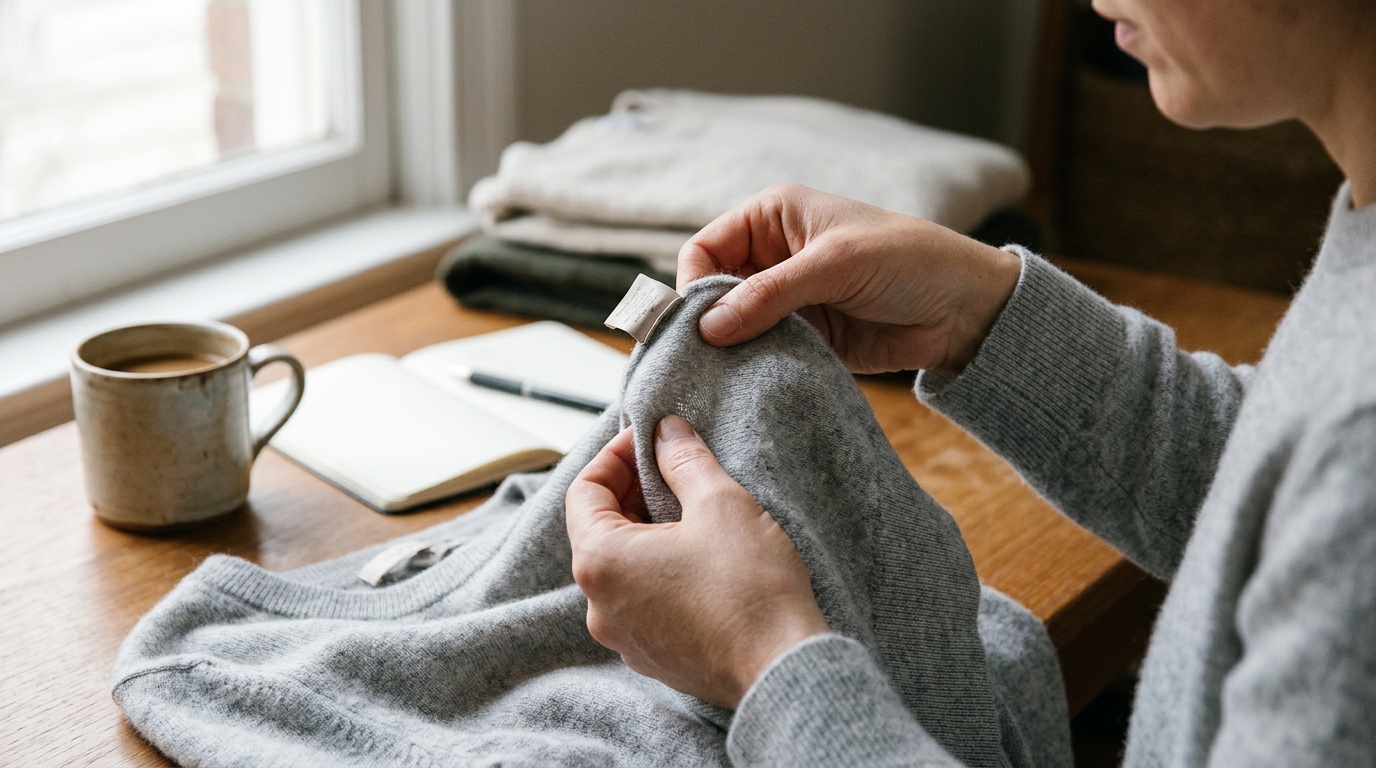
The clearest first step is to read the sweater’s sewn-in fiber-content label: “100% cashmere” identifies the garment as cashmere rather than a blend containing wool, silk, or synthetic fibers. If the label lists percentages for multiple fibers, the sweater is a blend, even if its name or description prominently features the word “cashmere.”
Look at the complete fiber-content statement rather than relying on a hangtag, brand name, or soft feel alone, since those details do not establish the proportions of the materials. If the label is missing or unclear, you cannot reliably confirm the fiber content just by looking at the sweater.
Inspect the Knit and Feel
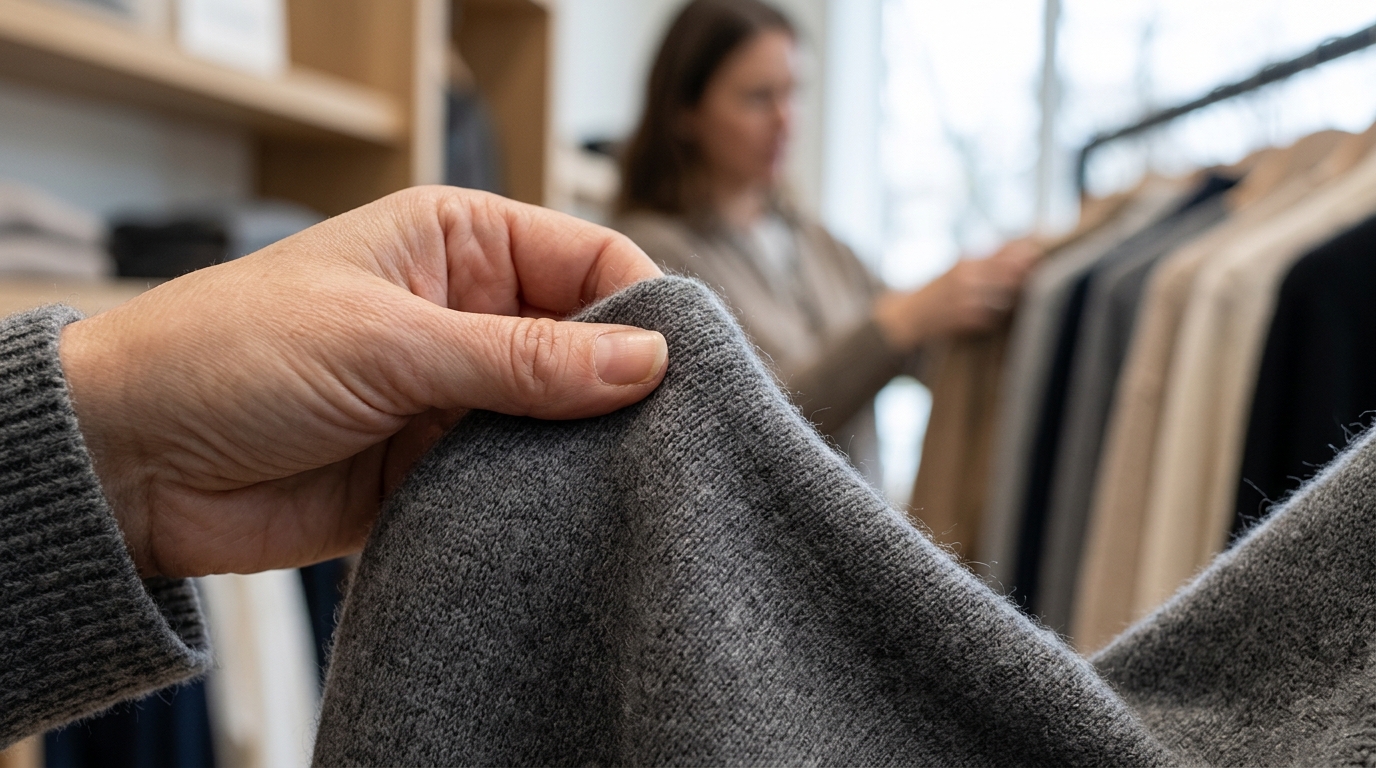
Cashmere generally feels soft and lightweight, but softness by itself is not proof of purity: other fibers and fabric finishes can produce a similarly smooth feel. Examine the knit in good light for an even appearance, and gently stretch a small area to see whether it returns to shape without remaining visibly distorted.
Some surface fuzz is normal, and pilling can develop where a sweater rubs against a coat, bag, or your body, so neither trait alone tells you whether cashmere is pure or high quality. A very loose knit, uneven stitches, or excessive shedding may be useful reasons to inspect the garment more closely, but they are not definitive fiber tests.
Featured in this guide
Chloé Ribbed Cashmere Sweater
Consider Quality Separately from Purity
A 100% cashmere label describes fiber content, not how fine the fibers are, how tightly the yarn was spun, or how well the sweater was constructed. Compare sweaters by looking at their stitch consistency, overall shape, and finishing as well as their feel, and remember that a thicker sweater is not automatically made from better cashmere.
For a closer look at one style in our selection, read our guide to the Chloé Ribbed Cashmere Sweater. Our team recommends considering how you want a sweater to fit and layer, while keeping its labeled fiber content separate from your judgment of its design and construction.
Care for the Sweater You Choose
Follow the garment’s care label, because washing and drying instructions can vary with its construction and any other materials it contains. Avoid hanging a wet knit, which can stretch it out of shape; instead, support its weight and dry it flat when the care instructions permit.
Store a clean sweater folded rather than on a hanger to help it keep its shape, and address pills gently with a sweater comb or fabric shaver. If you need conclusive identification beyond a label, specialized fiber testing is more reliable than home burn or water tests, which can damage the garment and do not establish an exact cashmere percentage.
FAQ
How to tell if 100% cashmere?
Read the sewn-in fiber-content label for a statement identifying the sweater as 100% cashmere. Feel and appearance can offer clues, but they cannot confirm an exact fiber percentage.
What are the signs of high quality cashmere?
Look for an even knit, careful finishing, and a sweater that retains its shape after gentle stretching. Softness is appealing, but assess it alongside construction rather than treating it as proof of quality.
See if Chloé Ribbed Cashmere Sweater fits your setup













Leave a comment