Can You Use a Bubble Tent in the Winter? Safety Tips
35% off on product page · save $905.50
Can You Use a Bubble Tent in the Winter? Safety Tips
Can You Use a Bubble Tent in the Winter?
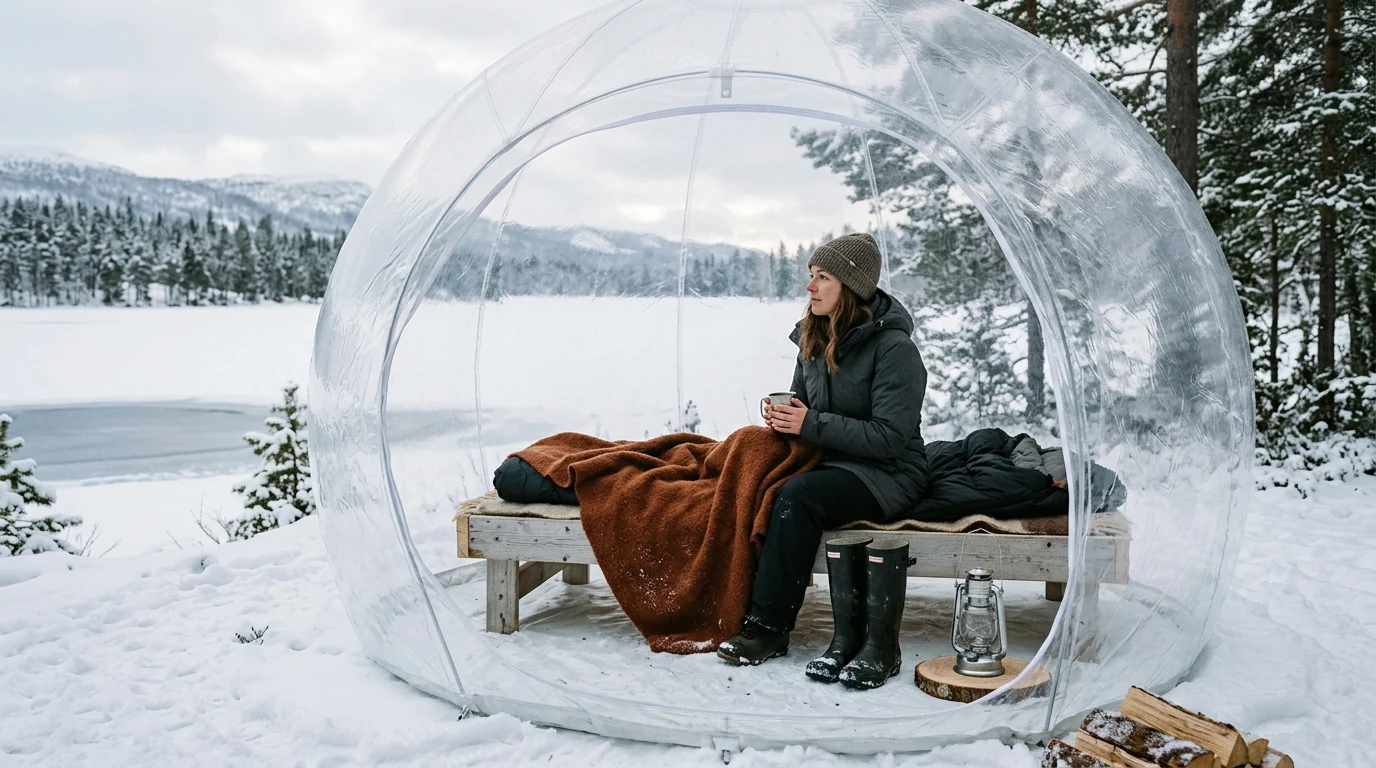
Yes, you can use a bubble tent in winter, provided it is designed for cold conditions and properly secured. A bubble tent can block wind and precipitation while creating a sheltered space for stargazing, dining, or backyard relaxation.
Check the Tent’s Temperature Rating
Before setting up, review the manufacturer’s recommended operating temperature. Cold weather can make PVC or TPU panels less flexible, while snow loads may stress the seams and frame. Choose a level site and remove snow from the roof before it accumulates.
Featured in this guide
Luxurious Inflatable Starview Bubble Tent for Camping
Maintain Inflation and Airflow
Most bubble tents need a blower running continuously to retain their shape. Confirm that the blower, extension cord, and outdoor outlet are rated for wet conditions, and keep the air intake clear of snow. Maintain ventilation to reduce condensation and preserve fresh airflow inside the enclosure.
Check the listed dimensions for maintain inflation and airflow against the available vehicle space before use.
Use Heat Carefully
A heater may improve comfort, but only if the tent manufacturer permits it. Use an electric heater with tip-over and overheat protection, place it on a stable surface, and maintain the required clearance from plastic walls and furnishings. Never use an open flame, charcoal appliance, or unvented fuel-burning heater inside.
Prepare for Winter Conditions
Anchor the tent according to its instructions and avoid use during heavy snow, ice, or strong winds. Add an insulated floor covering and cold-weather bedding rather than relying entirely on a heater. For more setup and safety details, read the complete guide on using a bubble tent in winter.

Watch · product page video
“Offers a unique way to enjoy the outdoors. Highly recommend.”
Queenjonesenterprise product page · Product review
FAQ
Can you put a heater in a bubble tent?
You can put a heater in a bubble tent only when the manufacturer allows it. Select an electric unit with automatic safety shutoffs, provide ventilation, and keep it away from the walls.
Are inflatable tents good for winter?
Inflatable tents can be good for mild winter camping if they have durable cold-rated materials and dependable anchoring. They are not automatically suitable for heavy snowfall, severe wind, or extreme alpine conditions.
What is the best tent for extreme cold weather?
The best tent for extreme cold weather is typically a four-season or expedition tent with strong poles, reinforced fabric, snow-shedding geometry, and secure guy-out points. Choose a model rated for the expected wind, snow, and temperature range.
See if Luxurious Inflatable Starview Bubble Tent for Camping fits your setup













Leave a comment