Portable Magnetic Drill Press: Setup and Buying Guide

64% off on product page · save $875.28
Portable Magnetic Drill Press: Setup and Buying Guide
Where a magnetic drill press earns its place
A magnetic drill press, often called a mag drill , uses a magnetic base to hold its position on suitable ferromagnetic steel while you drill. That can be useful when a steel workpiece is too large, fixed in place, or inconvenient to bring to a stationary press. Fabrication, structural work, and equipment repair are common settings, though each job needs its own assessment.
The word “magnetic” does not mean the base will hold reliably on every metal or every piece of steel. Material, thickness, surface condition, and positioning all affect the setup. Before committing to a hole location, make sure the work surface meets the tool manufacturer’s requirements and that you can secure the drill as instructed.
What our model offers
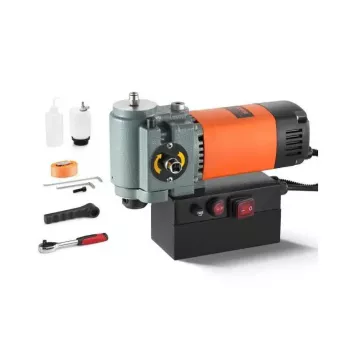
Our Portable Magnetic Drill Press 1300W with Cooling Device combines a portable magnetic-base design, a 1300W rating, and a cooling device. The cooling device supports cutting when used according to the tool and cutter instructions; it does not replace a compatible cutter or a secure setup.
Motor rating alone cannot establish the tool’s hole-size limits, cutter compatibility, or power requirements. Match those requirements to your planned work before you buy.
Featured in this guide
Portable Magnetic Drill Press 1300W with Cooling Device – Lightweight & Efficient
Decide if it fits your work
Start with the manufacturer’s manual, including its instructions for the magnetic base, securing method, cutter, and cooling device. Inspect the tool and cord before use. Then assess the steel where the base will sit, position the drill, and secure the setup as directed. Fit a compatible cutter and arrange cooling before starting the motor. Taking those steps in order helps you catch a surface, access, or power problem before the cutter meets the workpiece.
Wear appropriate eye protection, keep your hands clear of rotating parts, and secure loose clothing and hair. If the job calls for vertical or overhead drilling, pay particular attention to the manufacturer’s restraint instructions. Never assume the magnet alone is sufficient to prevent a fall if holding force is lost or power is interrupted.
Stop drilling if the base shifts, power is interrupted, or the setup no longer feels secure. Reassess and restore a controlled setup before continuing. For broader guidance on power-tool use and hazards, consult OSHA’s Hand and Power Tools guidance alongside the instructions for your specific equipment.
Decide whether it fits your work
Begin with the jobs you expect to do most often. Are the drilling locations on suitable steel surfaces? What hole sizes do you plan, and can you obtain compatible cutters? Will the required power be available where you work? If you regularly move between work areas, a portable mag drill may address a practical limitation of a stationary press—but portability does not remove the need to inspect and secure each new setup.
Our 1300W portable magnetic drill press is an option if you want the stated magnetic-base design and cooling device in one tool. Before ordering, confirm its detailed operating limits, cutter compatibility, power requirements, and included components on the product page. That comparison is more useful than choosing by motor rating alone.
If you’re browsing other projects in our store, we also carry a Reebok vs Nike comparison checklist. It is a separate digital shopping guide, not a drill accessory or a resource for selecting drilling equipment.
Before choosing, compare the product details with your daily routine, available space, care needs, and preferred setup. The strongest option is usually the one that fits the intended use clearly and remains simple to clean, store, and check before repeat use.
It is also worth checking measurements, material notes, included parts, and compatibility details so the item matches the way it will be used after delivery.
FAQ
What is the best magnetic drill to buy?
The best choice is one whose work-surface requirements, operating limits, cutter compatibility, and power needs match your planned jobs. Compare those details and the required securing procedure before buying.
What is the smallest magnetic drill available?
There is no single smallest model we can establish for every market or tool configuration. If space is tight, compare manufacturers’ published dimensions and required operating clearance.
What do you use a magnetic drill for?
You use it to drill holes in suitable steel workpieces when a magnetic-base setup is more practical than bringing the work to a stationary press.
See if Portable Magnetic Drill Press 1300W with Cooling Device – Lightweight & Efficient fits your setup













Leave a comment