Is Your Sweater 100% Cashmere? How to Check

21% off on product page · save $388.00
Is Your Sweater 100% Cashmere? How to Check
Start With the Fiber Label
The most direct way to tell whether a sweater is 100% cashmere is to read its fiber-content label: it should identify cashmere as the entire fiber content rather than list it alongside wool, silk, nylon, or another material. A label that says “cashmere blend” or gives cashmere as a percentage describes a mixed-fiber garment, even if the fabric feels especially soft.
Look for the sewn-in label inside the garment, which may be near a side seam or at the back of the neck, and distinguish the fiber information from the care instructions. If the label is missing or its wording is unclear, we recommend asking for the original fiber details before assuming the garment is pure cashmere.
Examine the Fabric
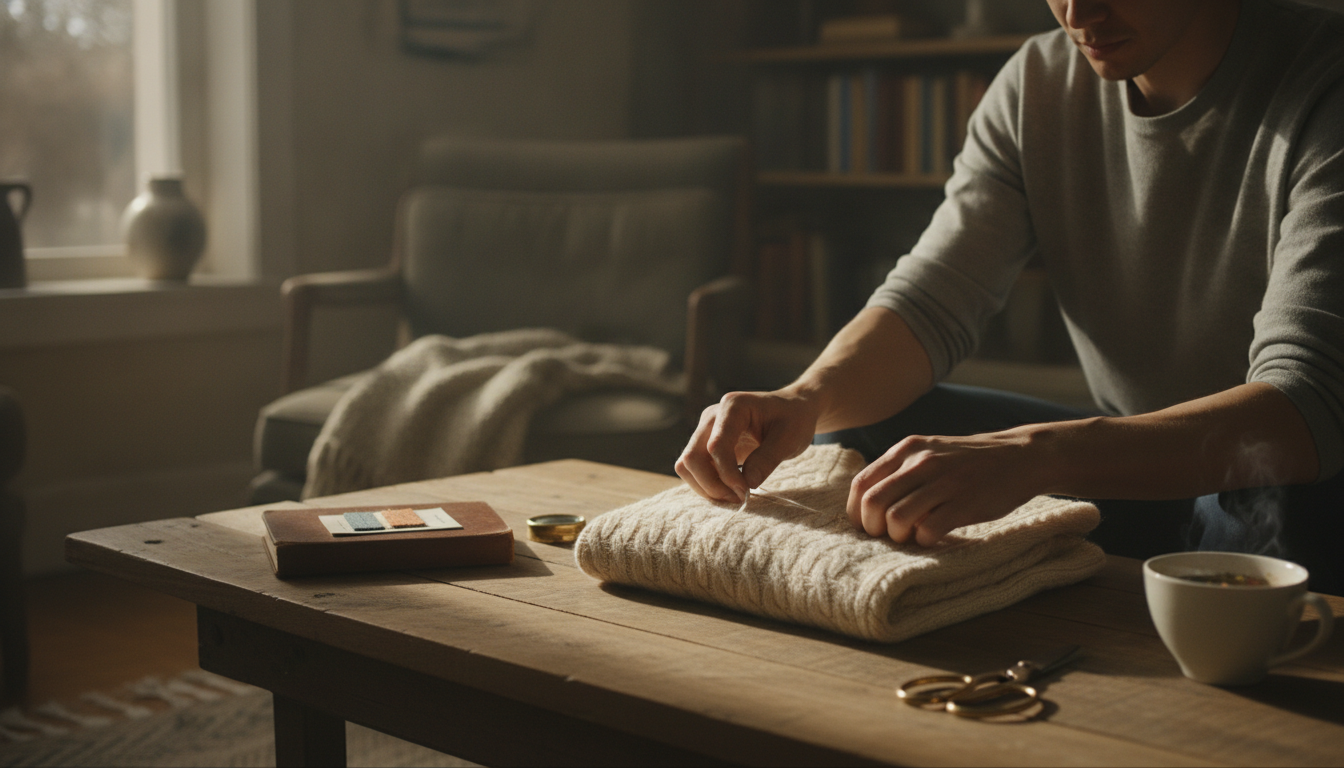
Cashmere usually has a soft, fine feel and a gentle surface halo, but softness alone cannot prove that a garment is 100% cashmere because blends and other fibers can feel soft too. Gently separate the knit with your fingers and look at its texture; a consistent appearance can help you assess the garment, though it cannot confirm the fiber content.
A ribbed knit may feel more structured or stretchy than a smooth knit because of the way it is constructed, not necessarily because of a different fiber. For styling and care ideas for a ribbed design, explore our Chloé Ribbed Cashmere Sweater guide, and use the garment’s own label to confirm its composition.

Featured in this guide
Chloé Ribbed Cashmere Sweater
Use Practical Checks, Not Destructive Tests
If you are buying a pre-owned sweater, compare its label and construction with the information available from the brand, and ask the seller about any missing tags. Our team suggests treating unusually vague descriptions or claims based only on touch as reasons to ask more questions, rather than as proof that the sweater is pure cashmere.
Avoid burn tests and chemical tests at home, since they can damage the garment and do not reliably establish whether every fiber is cashmere. When certainty matters and the label is unavailable, professional textile testing is a more dependable option than judging by appearance, price, or a single strand.
FAQ
Can you put 100% cashmere in the dryer?
It is generally best to avoid the dryer, because heat and agitation can shrink or distort cashmere. Follow the garment’s care label and, when washing is permitted, reshape it and dry it flat away from direct heat.
Is 100% cashmere expensive?
Cashmere is often more expensive than many other knitwear fibers, although prices vary by garment, construction, and brand. A high price does not prove a sweater is 100% cashmere, so check its fiber-content label as well.
See if Chloé Ribbed Cashmere Sweater fits your setup













Leave a comment